When most people think about a stolen identity, they imagine drained bank accounts or mysterious credit card charges. But there’s a quieter version of identity theft that often goes completely unnoticed.
Employment identity theft happens when someone uses your personal details—usually your Social Security number—to get a job. They’re not trying to take money from your accounts. They just need enough information to pass a background check and earn a paycheck.
You might wonder how can employment identity theft occur without setting off any alarms. Let me explain why it often slips through the cracks. When a criminal uses your identity to work and pay taxes, it doesn’t trigger the fraud alerts tied to your bank or credit cards.
Because of that, this type of personal information misuse can stay hidden for a long time. Most people only discover it later, when the IRS flags income they never earned or a government benefit application is suddenly denied.
Table of Contents
What Is Employment Identity Theft?
Employment identity theft is a specific type of fraud where someone uses your personal details to get a job in your name. Instead of stealing money right away, they’re focused on passing basic employment checks and getting added to a company’s payroll.
This is what makes it different from most identity theft cases. With financial fraud, the damage shows up quickly. With employment identity theft, the person is earning income under your identity, not draining your accounts.
In most cases, the stolen information includes your Social Security number and sometimes your date of birth. That’s enough to complete hiring paperwork, submit tax forms, and appear legitimate to an employer.
Because the activity looks “normal” on the surface, it often goes unnoticed. The problem only becomes visible later, when incorrect wages show up on your records or tax agencies and employers get conflicting information tied to your name.
How Employment Identity Theft Occurs Step by Step
If someone uses your identity to get a job, it’s natural to think you’d find out right away. In reality, that rarely happens. Most of the activity takes place in systems you don’t regularly check, so there’s nothing obvious to alert you early on.
In this section, I’ll walk you through how employment identity theft usually unfolds. We’ll look at what happens after personal data is exposed and how it can eventually be used for employment without your knowledge. Once you see the steps laid out, it becomes clear why this type of identity theft is so hard to spot in the beginning.
Stolen Personal Information
You might wonder how a stranger gets access to your personal details in the first place. In most cases, it isn’t a targeted attack or someone going through your physical mail.
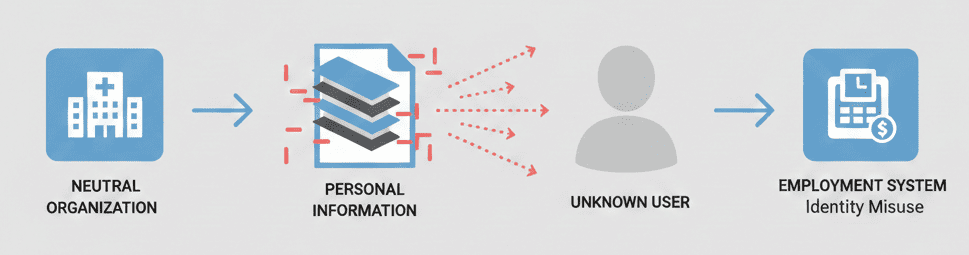
More often, it starts with a large data breach. Check if your Data i leaked with our guide, When a hospital, retailer, payroll provider, or similar organization is compromised, huge amounts of personal information can be exposed at once.
Your data becomes just one entry among millions. Names, Social Security numbers, and other identifiers are copied and passed along without the individual knowing it happened.
Phishing is another common source. You might receive an email that looks like it came from a recruiter or a government agency, asking you to “confirm” tax or employment information. Once that data is entered, it’s collected quietly.
From there, the information often changes hands. People who cannot pass normal employment checks may end up using someone else’s clean identity to appear legitimate during hiring. At that point, your information becomes the key that lets them step into a job without raising immediate suspicion.
Fake or Duplicate Employment Records
Once someone is hired using your personal information, a second version of “you” can quietly appear in employment systems. From an administrative point of view, it may simply look like you started a new job or picked up additional work.
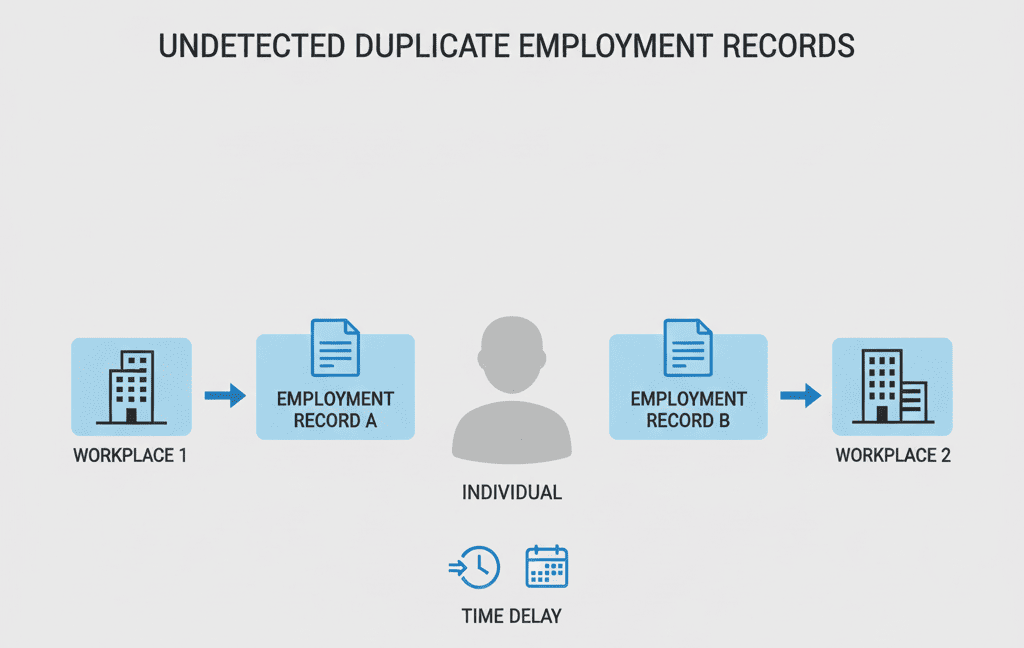
The reason this goes unnoticed is that employment databases don’t always talk to each other in real time. Your actual employer has no visibility into what another company records under your name. As a result, the imposter’s employment history exists in a completely separate system.
Reporting delays make the problem worse. Payroll and income data is usually submitted in batches rather than instantly. That means incorrect records can sit unnoticed for months.
By the time authorities review all reported income and spot inconsistencies tied to one identity, a long gap may have already passed. During that time, duplicate employment records can exist side by side without triggering any immediate alerts for you.
Weak Hiring Verification Processes
Not every employer has the time or resources to run thorough checks on every applicant. In some situations, the hiring process moves fast, and verifying every detail simply doesn’t happen.
When roles need to be filled quickly, businesses may rely on basic document reviews instead of deeper background screening. If the information appears consistent at a glance, the application can move forward without raising concerns.
This is where identity verification issues come into play. When checks are limited, incorrect or misused information may not stand out right away, especially if it matches what employers expect to see.
From your perspective, there’s no signal that anything is wrong. The system treats the information as valid, and the job continues under your name. It’s only later—when records don’t line up—that the problem becomes visible and the employment fraud risk finally surfaces.
Real-World Examples of Employment Identity Theft
To make this easier to picture, let’s walk through a few realistic situations. These aren’t specific case studies, but they reflect how employment identity theft is commonly discovered in real life.
In one case, you file your tax return early and expect a routine refund. Instead, weeks later, you receive a notice saying your return was rejected because income from an unfamiliar employer wasn’t reported. That’s often the first sign that someone else used your identity to work under your name.
In another situation, you apply for unemployment benefits after losing your job. The application is denied right away. According to state records, you’re already employed full-time at a company you’ve never worked for. The stolen identity tied to that job quietly blocks access to the support you need.
A third example shows up during a job search. A background check flags recent employment you don’t recognize. When asked to explain the gap or omission, you’re forced to defend yourself, while the employer sees conflicting records and questions your credibility.
Warning Signs of Employment Identity Theft
In most cases, you don’t notice anything wrong until something official arrives that doesn’t add up. Because no money is missing from your accounts, the early warning signs usually come from tax or government records, not your bank.
Here are some common signs of employment identity theft to watch for:
- Unexpected IRS notices
You receive a letter saying you failed to report income from an employer you’ve never worked for. - Denied government benefits
An unemployment or disability application is rejected because records show you’re currently employed. - Social Security earnings discrepancies
Your Social Security statement lists wages that are much higher than what you actually earned. - Confusing employment records
A recruiter or employer asks about a job you don’t recognize, or you receive tax forms from unknown companies.
These signs are easy to brush off at first. Many people assume it’s a clerical error or a mix-up in records. Unfortunately, that delay often allows the employment identity theft to continue quietly in the background for months before it’s fully uncovered.
Employment Identity Theft vs Tax Identity Theft
At first glance, these two types of identity theft seem almost the same, but their goals are different. Employment identity theft is about using your personal information to get a job. The person behind it wants steady income, not direct access to your bank account.
Tax identity theft, by contrast, is focused entirely on money. In that case, someone uses your Social Security number to file a fraudulent tax return and claim a refund before you get the chance to file yourself.
The reason these crimes are often connected is reporting. When someone works under your identity, their wages are sent to tax authorities under your name. Later, when you file your own return, the numbers don’t match.
That’s why many people start asking how can tax identity theft occur alongside employment fraud. The unexpected income creates tax problems you never caused, leading to rejected returns or further scrutiny
How to Reduce the Risk of Employment Identity Theft
Preventing employment identity theft entirely is difficult because so much depends on how employers verify data. However, maintaining strict control over your Social Security number is the primary defense.
Being cautious about who receives your personal details reduces the chance of exposure. Simply questioning why a form requires your SSN can sometimes stop unnecessary data sharing.
Regularly reviewing your Social Security Statement is also a quiet but effective habit. Checking for earnings you don’t recognize helps catch issues early, before tax season arrives.
If you do find suspicious activity, the recovery process is distinct from financial fraud. I will cover what to do after identity theft in a future guide, along with specific strategies for removing personal data from the web to lower your overall risk profile.
Frequently Asked Questions
Can someone really work under my name without me knowing?
Yes, it happens more often than people realize. If someone uses your Social Security number to get hired, the employer reports income under your name. You usually don’t find out until a tax notice arrives or your Social Security earnings suddenly don’t match your records.
Will employment identity theft hurt my credit score?
In most cases, no. Employment identity theft is about earning wages, not borrowing money. Your credit score is usually unaffected unless the stolen information is also used to open loans or credit accounts. The main impact is on tax records and government benefits.
Will I have to pay taxes on the money they earned?
At first, the IRS may assume the income is yours and send a tax notice. You aren’t legally responsible for wages you didn’t earn, but you do need to report the fraud to correct the records. It’s usually an administrative issue, not a permanent tax debt.