You open YouTube, click on a trending 40-minute video, and it starts playing immediately. No unskippable 15-second double pre-roll. No sponsored banners cluttering your screen. No mid-roll commercial interrupting the speaker mid-sentence.
You didn’t hand over $13.99 a month for YouTube Premium. You didn’t install sketchy third-party extensions that siphon your browsing history. You simply downloaded Brave, a free browser that blocks intrusive ads and tracking scripts by default.
This immediately triggers a question that keeps privacy skeptics awake at night: how does brave make money if it kills the very advertisements that keep the internet funded? And more importantly, if Google loses billions to ad blockers every year, why hasn’t YouTube sued Brave into bankruptcy?
I’m Rock, the founder of Pixel Defence. I run this site to investigate Big Tech data harvesting and help everyday people reclaim their digital sovereignty. When a tech company offers you a free product that cuts off Google’s revenue, you should always be suspicious.
In this investigation, I am tearing down the myths, breaking down Brave’s real financial engine, and exposing the fascinating legal fortress that prevents Google from shutting down ad-blocking browsers.
Table of Contents
Does Brave Steal YouTube’s Ads?
Before we look at the balance sheet, we have to dismantle the single biggest lie circulating on Reddit and tech forums. A massive number of users believe that Brave intercepts YouTube’s video advertisements, strips them out, and injects its own video ads into the player to pocket the cash.
I tested this directly in our lab. That is factually false.
If Brave were actively hacking YouTube’s proprietary video stream, replacing Google’s video inventory with its own commercial advertisers inside the YouTube player, Google would have filed an emergency injunction in federal court before sundown. That would be direct commercial interference and trademark infringement.
Brave does not replace YouTube’s ads with its own. When you watch a video on YouTube using Brave, YouTube’s advertising code is simply stopped from executing on your personal device. No replacement video ad is played.
So how does Brave block YouTube ads without triggering an immediate legal catastrophe? It comes down to who actually owns the hardware sitting on your desk.
How Does Brave Block YouTube Ads Without Extensions?
To understand why this is legally untouchable, you have to understand what happens under the hood when your browser visits a website.
When you navigate to YouTube, your computer sends an HTTP request to Google’s web servers. Google’s servers respond by transmitting thousands of lines of HTML, CSS, JavaScript, and media links back to your computer.
At that exact moment, Google’s job is finished. The data has arrived at your house. Your browser takes over.
In standard browsers like Google Chrome, the browser loyally follows every single instruction Google sent. It executes invasive tracking scripts, records your hardware canvas fingerprint, connects to ad-bidding networks, and queues up a commercial.
Brave operates under a completely different philosophy called Brave Shields. Shields is an engine built directly into the browser core using Rust and C++. It acts as a local security checkpoint on your computer.
When Google’s web page commands your browser to fetch an ad from doubleclick.net or run an ad-insertion script, Brave Shields cross-references that request against community-maintained filtering rules (like EasyList and Brave’s custom lists).
If the request matches a known advertising or tracking domain, Brave simply drops the connection. The ad request never leaves your computer.
If you want to see how much telemetry and advertising code your current browser executes behind your back, check out my Chrome privacy kit where I expose Chrome’s hidden tracking scripts.
Brave isn’t hacking YouTube’s servers. It is simply choosing which incoming packets to display on your monitor. And as we are about to see, that distinction is worth billions of dollars.

How Does Brave Make Money If It Blocks Ads?
If Brave gives away its browser for free, doesn’t sell your browsing history, and blocks the web’s primary revenue stream, how does it pay hundreds of top-tier software engineers?
The short answer: Brave is not just an ad blocker. It is a diversified privacy infrastructure company.
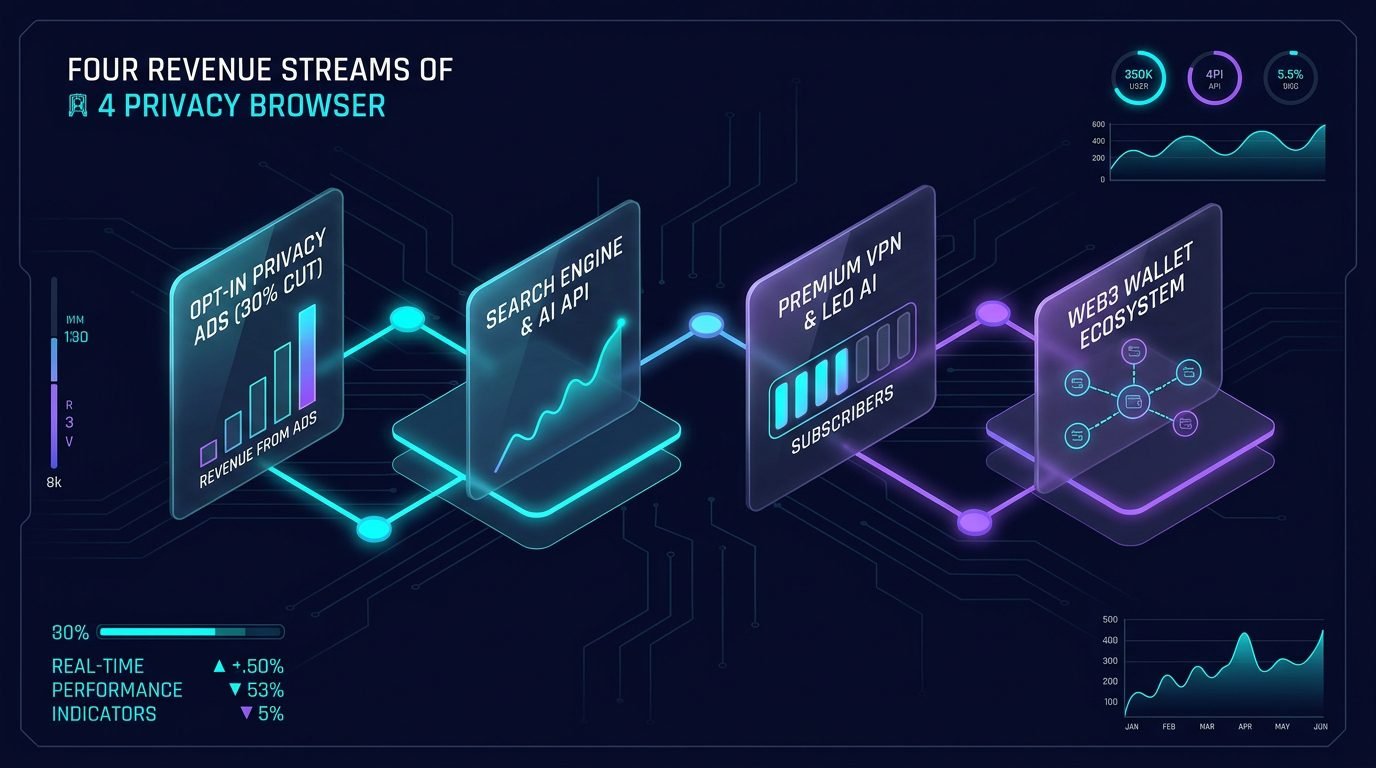
While you are using Brave to bypass YouTube’s marketing onslaught, the company generates tens of millions of dollars across four legitimate, privacy-preserving business pillars.
1. The Opt-In Brave Ads Network
Brave didn’t abandon advertising. It completely redesigned how digital advertising works.
Traditional advertising, perfected by Google and Meta, relies on surveillance capitalism. They track every search you perform, every video you watch, and your exact GPS coordinates. They transmit this behavioral profile to remote ad servers to bid on your attention in milliseconds.
Brave flipped this architecture completely upside down. Brave built an on-device ad catalog.
Every few hours, Brave downloads a general catalog of advertisements to your local machine. A local machine-learning model on your computer matches relevant ads to your recent browsing activity.
Your browsing history never leaves your device. Brave’s servers never know who you are, what websites you visited, or what you bought.
Furthermore, these ads do not appear inside websites. You will never see a Brave ad replacing a YouTube banner or a news article image. Instead, they appear in two distinct, non-intrusive formats:
- Sponsored Images: High-resolution branded wallpapers displayed on the New Tab page (sponsored by companies like crypto exchanges, gaming brands, and VPNs).
- System Notifications: Small, native operating system notifications that appear only if you deliberately opt in.
Users who opt into this system receive 70% of the ad revenue in the form of Basic Attention Tokens (BAT), while Brave keeps the remaining 30%. Advertisers pay Brave millions in real fiat currency according to Brave’s official business model disclosures to buy inventory on this privacy-first network.
2. The Multi-Million Dollar Brave Search Engine & API
For years, privacy browsers like Firefox relied on Google paying them hundreds of millions of dollars annually to remain the default search engine. Firefox took Google’s money while preaching privacy—a blatant conflict of interest.
Brave took an enormous financial gamble: it built its own independent web search index from scratch.
When you search via Brave Search, you are not querying Google or Bing through a proxy. You are querying Brave’s private index of billions of web pages.
Brave monetizes this search engine in two lucrative ways:
- Search Ads: Anonymous, non-tracking keyword ads shown on the search results page.
- The Brave Search API: This is Brave’s fastest-growing enterprise revenue stream. With the explosion of artificial intelligence, hundreds of AI startups and LLM developers need real-time, clean web data to ground their AI models without paying Google or Microsoft exorbitant enterprise scraping fees. Brave licenses its search index via paid commercial APIs to external tech companies.
3. Premium Subscriptions (Brave VPN & Leo AI)
Brave has aggressively expanded into consumer subscription software. They understand that while millions want free ad blocking, a sizable percentage of users will happily pay for integrated security services:
- Brave Firewall + VPN: Powered by Guardian, Brave offers a fully integrated system-wide VPN for iOS, Android, and desktop. Users pay $9.99/mo or $99/year. (If you want to see how standalone VPNs compare on data leak protection, read my hands-on Proton VPN review).
- Brave Leo Premium: Brave’s integrated, privacy-focused AI assistant allows users to summarize pages, transcribe video audio, and analyze code. While the basic model is free, power users pay $14.99/mo for access to advanced models like Claude 3.5 Sonnet and Mixtral.
- Brave Talk Premium: An encrypted video conferencing platform that competes with Zoom and Google Meet, offering unlimited participants and recording tools for $7/mo.
4. Web3 and Digital Asset Partnerships
Brave was founded by Brendan Eich, the co-founder of Mozilla and the creator of JavaScript. Eich integrated blockchain utility directly into the browser via the Brave Wallet.
Unlike third-party extensions like MetaMask that can leak your IP address or inject tracking code, Brave Wallet is native to the browser core.
Brave earns transaction fees through native token swaps, crypto on-ramps, decentralized exchange (DEX) aggregators, and partnerships with hardware wallet manufacturers. You never have to touch or enable Web3 features to use the browser, but for millions of global users, it serves as a major financial bridge that funnels revenue back into browser development.
Why Doesn’t YouTube Sue Brave Out of Existence?
Now we arrive at the million-dollar question.
YouTube brought in over $31 billion in advertising revenue in 2024 alone. Alphabet (Google’s parent company) employs the most formidable, highly-paid corporate legal team on Earth.
If Brave is actively circumventing YouTube’s pre-roll ads, why doesn’t Google file a lawsuit in California federal court tomorrow and shut Brave down?
To someone outside the legal world, it seems like an open-and-shut case. YouTube loses ad revenue; Brave enables the loss; therefore, Brave must be guilty.
In reality, courtrooms do not exist to protect corporate business models. Here are the five legal and strategic reasons why YouTube cannot simply sue Brave.
1. Ad Blocking Is Not Copyright Infringement
The primary weapon media companies use against internet software is the Digital Millennium Copyright Act (DMCA) and federal copyright law.
For a copyright claim to work, Google would have to prove that Brave makes an unauthorized reproduction, distribution, or derivative work of YouTube’s copyrighted content.
When you stream a video on YouTube, the video itself is copyrighted expression. But the HTML layout, the CSS styling rules, and the network requests sent by your browser are not a fixed artistic work.
When Brave drops an advertising script, it is not modifying YouTube’s master copy on Google’s servers. It is simply instructing your computer’s processor not to request a specific file.
Imagine you purchase a physical newspaper. You sit down at your kitchen table with a pair of scissors and cut out the advertisements before reading the articles.
Did you commit copyright infringement? Of course not. You modified your own private reading experience on your own physical paper.
Brave is simply digital scissors. Courts around the world have repeatedly ruled that altering the presentation of content inside a user’s local memory does not constitute copyright infringement. A comprehensive legal analysis published by the UIC Law Review on blocking ad-blocking confirmed that attempting to treat client-side rendering decisions as copyright infringement fundamentally misinterprets statutory copyright protections.
2. The Landmark German Court Decisions (Axel Springer v. Eyeo)
We don’t have to speculate on how courts view this issue. We already have the definitive legal precedent.
Between 2014 and 2022, Axel Springer—one of the largest publishing and media conglomerates in Europe—launched an all-out legal assault against Eyeo GmbH, the German company behind Adblock Plus.
Axel Springer sued Eyeo across multiple courts, using every legal argument Google’s lawyers could dream up:
- They claimed ad blocking constituted unfair competition because it destroyed the economic foundation of digital journalism.
- They claimed ad blocking was copyright infringement because it modified the layout and HTML code of their websites in the user’s browser.
The legal battle went all the way to Germany’s highest civil court: the Federal Court of Justice (Bundesgerichtshof or BGH).
In 2018, the BGH issued a historic ruling according to official WIPO records of the German Federal Court decision, completely rejecting Axel Springer’s unfair competition claims. The Supreme Court declared that ad blocking software is entirely lawful. Users have a fundamental right to control what happens on their screens, and software vendors have a right to supply tools that fulfill that consumer demand.
Axel Springer didn’t stop there. They filed a new copyright lawsuit in Hamburg. In January 2022, the Hamburg Regional Court flatly dismissed their copyright claims, confirming that altering HTML and CSS in computer RAM does not infringe on a publisher’s copyright.
While German rulings do not directly govern US federal courts, judges globally study these precedents. Google knows that if they sue Brave in the United States, they face an uphill battle against established legal doctrine.
3. The “Precedent Risk” Trap (Why Google Fears Court)
This is the dirty secret Big Tech will never admit: Google is terrified of taking an ad blocker to trial.
Right now, the legal status of ad blocking in the United States exists in a favorable gray area. Most consumers assume ad blocking is a minor hack, while websites put up gentle popups asking people to disable them.
If Google sues Brave in a US District Court, one of two things will happen:
- Google wins, creating international outrage and massive consumer migration to even more aggressive, decentralized open-source tools (like uBlock Origin) that cannot be sued because they have no corporate headquarters.
- Google loses.
If Google loses a high-profile lawsuit against Brave, a federal judge will officially write into US case law that blocking ads, stripping telemetry, and bypassing commercial paywalls on the client side is a protected consumer right.
Once a precedent like that is chiseled into federal law, every browser on Earth—including Microsoft Edge, Apple Safari, and Mozilla Firefox—would face zero legal friction in making ad blocking the permanent, unchangeable default for all humanity.
Google will never risk its entire corporate advertising empire on a courtroom roll of the dice.
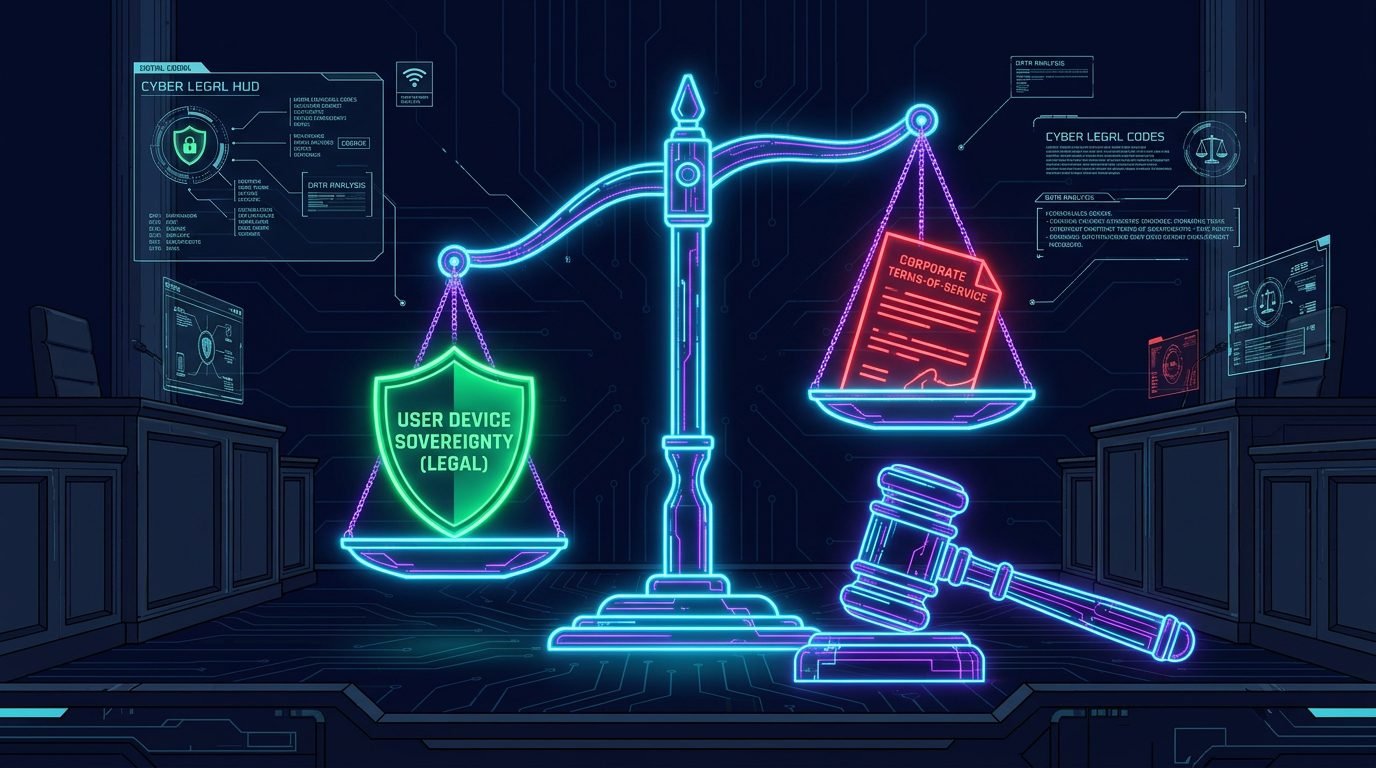
4. Terms of Service Cannot Ban Third-Party Browsers
Every time this debate surfaces, someone points to the official YouTube Terms of Service:
“You are not allowed to… circumvent, disable, fraudulently engage with, or otherwise interfere with any part of the Service…”
YouTube’s Terms of Service are a private contract between Google and an individual account holder.
If you log into YouTube with your Google account while using Brave, Google technically has the contractual right to terminate your account or restrict your viewing. They can enforce their private house rules on their private property.
However, Brave is not a party to that contract.
Brave Software Inc. did not click “I Agree” to YouTube’s terms when you installed their browser. Brave provides a general-purpose web browser, identical in fundamental architecture to Chrome, Safari, or Edge.
Under US contract law, a service’s terms cannot be weaponized to shut down a third-party software manufacturer whose tools happen to be used by consumers to navigate the web. If that were legal, car manufacturers could be sued by toll booth operators because drivers decided to take a scenic back road.
5. Technical Warfare Is Cheaper Than Legal Warfare
Instead of spending tens of millions of dollars in a high-risk courtroom spectacle, Google fights Brave where Google has the home-court advantage: in the code.
For the past two years, YouTube has been waging an intense technical cat-and-mouse war against ad-blocking browsers:
- Script Obfuscation: YouTube constantly rotates and randomizes the variable names in its JavaScript player every few days, attempting to break the CSS element-hiding rules used by Brave Shields.
- The 3-Strike Warning System: YouTube rolls out detection scripts that check if video ad requests failed to fire. If the browser blocks them, YouTube displays an alert threatening to disable video playback after three videos.
- Server-Side Ad Injection (SSAI): YouTube’s latest and most aggressive weapon. Instead of sending the video stream and the ad stream separately from different servers, YouTube’s servers dynamically stitch the advertisement directly into the main video stream file before sending it to your computer.
When an ad is baked directly into the video data, a browser cannot simply block a network domain without breaking the video itself.
Yet, within hours of every YouTube update, open-source filter maintainers and Brave developers push silent background updates to Shields, re-enabling ad-free playback.
Google prefers this endless technical skirmish. It frustrates casual users, pushes some people to pay for YouTube Premium, and avoids the catastrophic risk of a public courtroom defeat.
Do Ad Blockers Hurt YouTube Creators?
As much as we despise intrusive tracking, we have to address the real casualty of this war: independent content creators.
When you block an advertisement on a YouTube video, Google loses ad impression revenue. But the creator who spent 60 hours editing that video also loses their 55% share of the AdSense payout.
Brave recognized this dilemma early on and built Brave Rewards and the Brave Creators program.
Verified creators—ranging from YouTube channels to independent blogs—can register their channels with Brave. Users who opt into Brave Ads can allocate their earned BAT tokens to automatically tip their favorite creators based on their attention time.
However, we need to be completely honest: Brave Rewards is not a 1-to-1 replacement for lost YouTube ad revenue.
Only a small fraction of Brave users actively participate in Brave Rewards, and an even smaller fraction of creators go through the friction of verifying their channels and cashing out cryptocurrency.
If you rely on ad-blocking browsers like Brave to preserve your sanity and bandwidth, you have an ethical responsibility to support creators through direct channels: Patreon, channel memberships, merchandise, or direct tipping.
Ad blocking should be a defense against corporate surveillance, not an excuse to starve independent artists of their livelihood.
How to Protect Your Privacy Without Breaking Your Web
The war between Google and privacy-first browsers is only going to escalate. As Google prepares to neuter traditional ad-blocking extensions in Chrome through Manifest V3, standalone browsers with native ad-blocking engines like Brave are becoming mandatory survival gear.
Here is my recommended protocol to browse YouTube and the web securely today:
- Ditch Chrome for Real Privacy Browsers: Google Chrome exists to collect user behavioral profiles for advertisers. Switch your daily driver to a browser with native, engine-level blocking like Brave or hardened Firefox.
- Enable Aggressive Shields on Brave: By default, Brave uses standard ad blocking. Open
brave://settings/shields, navigate to “Trackers & ads blocking”, and switch it from Standard to Aggressive. This blocks first-party tracking scripts before they can even ping YouTube’s detection servers. - Use Secondary Invidious or FreeTube Clients: If YouTube’s browser detection popups temporarily block your playback during an update cycle, use open-source privacy frontends like FreeTube (desktop) or Invidious instances. They pull raw video streams without loading YouTube’s tracking scripts.
- Isolate Your Google Identity: Never log into your personal Google account inside the same browser profile you use for aggressive ad blocking. Run YouTube in a secondary container or private window to prevent Google from linking your hardware profile to your real-world identity.
Frequently Asked Questions
How does Brave block YouTube ads without an extension?
Brave uses a native, engine-level filtering technology called Brave Shields written in Rust and C++. Instead of relying on slow extensions that execute after a page begins loading, Brave intercepts network requests at the engine level and drops connections to known Google advertising domains before the ad scripts can execute.
Is blocking YouTube ads illegal or against copyright law?
No. Multiple high-level court decisions, most notably the landmark rulings by Germany’s Federal Court of Justice (BGH in 2018) and the Hamburg Regional Court (in 2022), established that ad blocking is neither unfair competition nor copyright infringement. Users legally own their devices and have the right to determine what data and scripts execute in local computer RAM.
Why doesn’t YouTube sue Brave out of existence?
Google avoids suing Brave in federal court primarily due to “precedent risk.” If Google sues and loses, a US federal court would formally codify into binding law that ad blocking and telemetry stripping are protected consumer rights. Furthermore, Brave does not breach copyright law or replace YouTube’s ads with its own inside video streams.
Can YouTube detect Brave ad blocker?
Yes, YouTube frequently updates its client-side JavaScript detection scripts to check whether ad-tracking telemetry successfully fired. When YouTube detects that ad scripts were aborted, it may display a warning popup or temporarily restrict playback. However, Brave developers and filter-list maintainers constantly push real-time script updates to bypass these detections.
Do ad blockers hurt YouTube creators?
Yes, blocking advertisements prevents YouTube from logging an ad impression, meaning eligible creators do not receive their standard 55% AdSense revenue split for that view. While Brave offers an optional BAT tipping system through Brave Rewards, it is not a complete financial substitute for creator ad revenue.
The Conclusion on How Does Brave Make Money
Understanding how does brave make money reveals the fundamental truth behind modern web privacy: you do not need to surrender your personal data to build a sustainable, multi-million-dollar technology company.
Brave proved that a browser can respect user consent, strip out toxic surveillance tracking, and still generate massive profits through ethical advertising, independent search index licensing, and premium software subscriptions.
Big Tech wants you to believe that your computer screen belongs to them the moment you type their web address. It doesn’t.
You paid for the hardware, you pay for the electrical power, and you pay for the internet connection. You have the absolute right to decide what code executes on your machine—and no corporate intimidation will change that reality.